
CRUISE TIP
OVER 60? NEVER BUY THESE 8 THINGS ON A CRUISE WITHOUT CHECKING FIRST
Sep
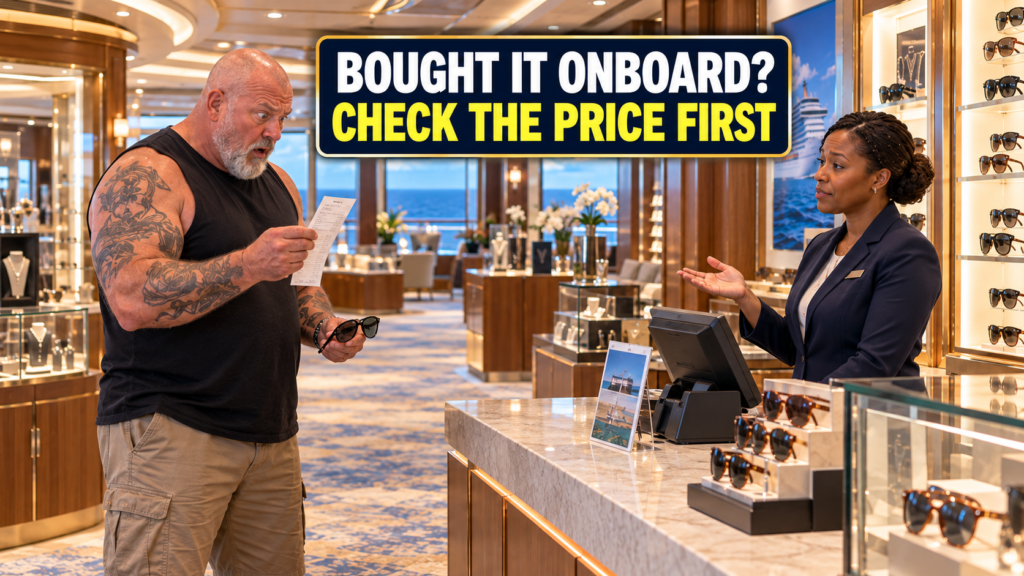
The man at the cruise ship shop looked like someone who was very difficult to surprise.
He was broad-shouldered, heavily tattooed, and still powerfully built in his late 60s. A few minutes earlier, he had spotted a pair of sunglasses he liked, made his purchase, and expected to continue enjoying his afternoon.
Then he looked closely at the receipt.
His expression changed immediately.
“You charged me THAT much for these sunglasses?!”
The employee remained calm.
“That was the listed price, sir. The total was shown before purchase.”
That explanation did not make him any happier.
“No. Get your manager. Right now.”
It would be easy to hear a story like this and conclude that the lesson is simply, “Don’t shop on a cruise ship.”
But that misses the point.
Shopping, dining, drinking, gambling, booking excursions, and buying vacation photos can all be perfectly reasonable ways to spend money on a cruise.
The problem is buying first and understanding the price, terms, or actual value later.
Vacation mode can make that surprisingly easy.
You may be relaxed. You may not want to spend your afternoon comparing prices. A promotion may feel temporary. And because purchases onboard can sometimes be charged to your cruise account rather than paid for with cash at that exact moment, it can be easy to focus on the experience instead of the accumulating total.
So if you’re cruising after 60 and want to enjoy your vacation without coming home wondering where the money went, here are eight purchases worth checking carefully before you say yes.
1. Sunglasses, Watches or Jewelry Without Checking the Final Price
Let’s start with the mistake our angry passenger made.
He liked the sunglasses.
He bought them.
Only afterward did he really react to what he had paid.
That doesn’t automatically mean the store did anything wrong. It also doesn’t tell us whether the sunglasses were a good or bad deal compared with somewhere else.
The important mistake happened earlier:
He completed a discretionary purchase without being comfortable with the final price.
This matters even more when you move from relatively inexpensive souvenirs into watches, jewelry, premium accessories, or other higher-priced merchandise.
A sign advertising a promotion can catch your attention, but the word “sale” by itself tells you very little about whether something represents good value for you.
Before paying, slow the transaction down.
Confirm the exact item you’re buying. Check the final price. Ask what is included. Understand applicable return or exchange terms. For an expensive purchase, comparison-shopping may also be worth the extra few minutes.
And don’t be embarrassed to walk away.
You are not wasting anyone’s time by deciding that the price is more than you want to spend.
A vacation purchase should still make sense after the vacation excitement disappears.
2. Toiletries and Everyday Essentials You Could Easily Have Packed
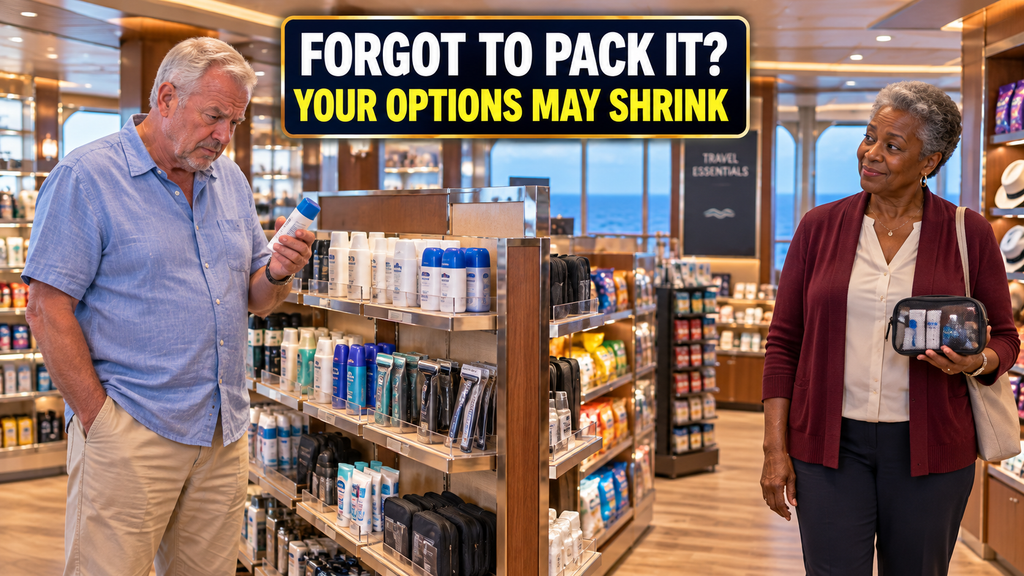
Forget toothpaste at home and suddenly a very boring item becomes important.
The same can happen with deodorant, shaving supplies, sunscreen, and other everyday personal-care products.
Ships may have places where passengers can purchase certain essentials, but availability, brands, sizes, and prices can vary.
That is the real reason to think ahead.
It would be misleading to say every toiletry sold onboard is always dramatically more expensive than it would be at home. What matters is that once you are sailing, your choices may be more limited than they were before departure.
Before leaving home, make a short “boring things” checklist.
Think about the products you use every morning and every evening.
If there is a specific brand, size, or product you strongly prefer, packing it can be far easier than hoping you will find exactly what you want after boarding.
For travelers over 60, this isn’t about assuming you need more supplies because of your age.
It is simply about convenience.
The best onboard purchase may be the one you never needed to make because you packed thoughtfully in the first place.
3. A Drink Package Before Doing the Math
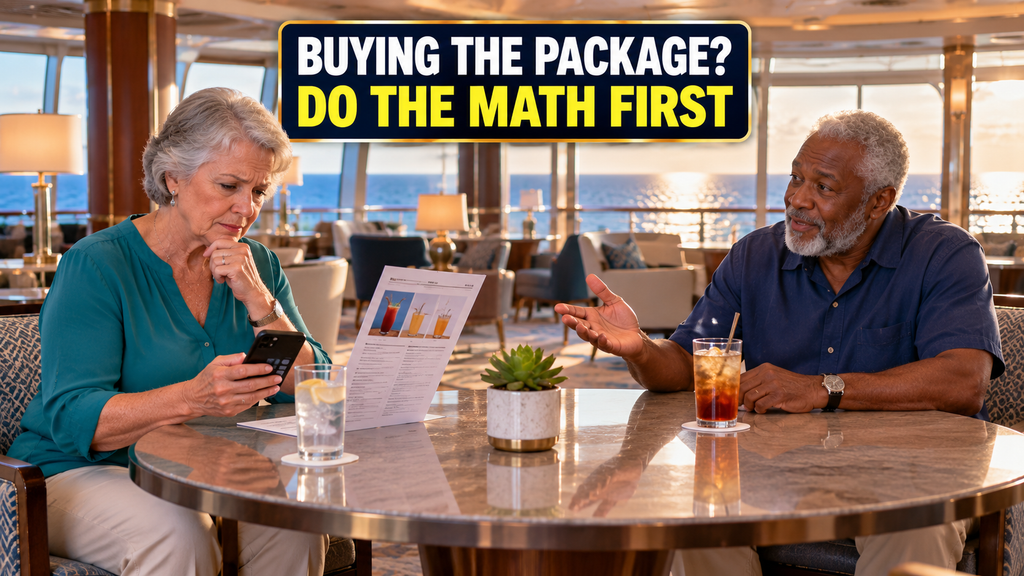
A drink package can be excellent value for one passenger and unnecessary spending for another.
That’s why “Should I buy the drink package?” does not have one universal answer.
Instead, ask a better question:
“What would I realistically drink without the package?”
Look at what the specific package includes and excludes. Check the current terms for your sailing. Understand any applicable additional charges and package rules.
Then compare that with your normal vacation habits.
Don’t calculate based on the person sitting next to you.
And don’t calculate based on an imaginary version of yourself who suddenly plans to consume far more beverages every day simply because you are on a ship.
If you normally enjoy several eligible drinks throughout the day, the calculation may favor a package.
If you consume relatively few paid beverages, your calculation may look completely different.
There is another trap here: once someone has paid for a package, they may feel pressure to “get their money’s worth.”
That can turn a convenience purchase into a daily target.
The package should fit your vacation.
Your vacation should not have to fit the package.
4. Individual Cruise Photos Before Checking Your Options
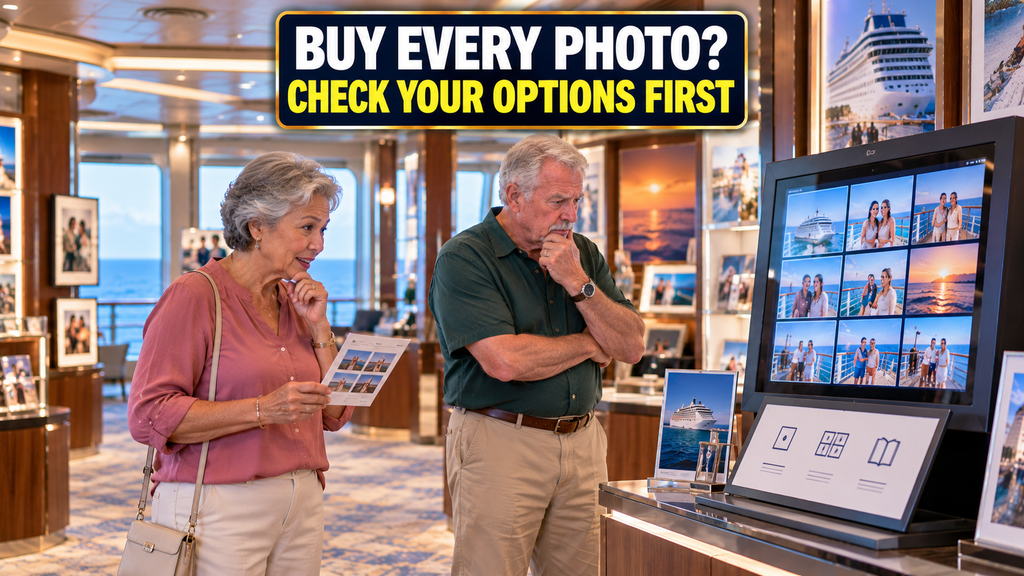
Cruise photos are emotional purchases.
You’re dressed for dinner.
Everyone looks good.
The ocean is behind you.
Maybe it’s a family trip you have been planning for a year.
You see the photo and think, “We have to get this one.”
There is nothing wrong with that.
But then another good photo appears tomorrow.
And another one after dinner.
And another on a different evening.
Individually, each decision may feel small. Together, they can become a larger purchase than you originally intended.
Before buying repeatedly, check what photo options are available on your particular sailing.
If a package or bundle is offered, understand exactly what it contains and compare it with what you actually want.
Do not automatically assume a package is the better deal.
If you only want one special photograph, buying one may make perfect sense.
If you expect to want many photos, another option may deserve a closer look.
The key is deciding intentionally instead of making the same spontaneous purchase over and over again.
5. Art or Collectibles Because Someone Calls Them an “Investment”
There is an enormous difference between these two statements:
“I love this piece and want it in my home.”
And:
“I’m buying this because I’m sure it will become more valuable.”
The first is a personal purchasing decision.
The second involves an expectation about future value.
That expectation deserves much more scrutiny.
If you are considering an expensive piece of art or another collectible onboard, do not let excitement substitute for homework.
Understand what you are buying.
Review the documentation provided for the specific item and transaction. Understand applicable payment, shipping, return, or other relevant terms before committing significant money.
Most importantly, be cautious about treating future appreciation as a certainty.
Nobody needs to tell you that you cannot enjoy art.
If you love something, understand the purchase, can comfortably afford it, and want to own it, that is your decision.
Just separate the enjoyment of owning an object from the assumption that it must produce a financial return later.
Those are two very different reasons to buy.
6. Casino or Bingo Spending Just to Chase a Prize
Cruise casinos and bingo can be entertainment.
Treating them as a reliable way to make money is a different matter.
One of the easiest spending traps sounds like this:
“I’ve already spent this much. I might as well keep going.”
That is not a cruise-specific problem.
It is a human one.
The money already spent can make the next wager or purchase feel strangely necessary, as though stopping now would somehow make the earlier spending worse.
But spending more does not guarantee that you will recover what you already spent.
Before you start, decide what entertainment budget you are genuinely comfortable losing.
Think of it the same way you might budget for a show, a special dinner, or another paid activity.
Once that entertainment budget is gone, the entertainment is over.
The same principle applies if rewards, perks, prizes, or promotions are involved.
Do not spend beyond your intended budget simply because the next milestone suddenly feels close.
A perk is not automatically valuable if reaching it requires spending money you never planned to spend.
7. Shore Excursions Before Comparing What You’re Actually Getting
This one requires more nuance than “cruise excursions cost too much.”
A shore excursion offered through a cruise line can provide real convenience.
Depending on the specific excursion and its terms, you may value its transportation arrangements, meeting logistics, organization, or simply the convenience of booking through the cruise line.
An independent option may have a different price, itinerary, group size, cancellation policy, or meeting arrangement.
Neither category is automatically better.
So don’t compare only the headline prices.
Compare what you actually receive.
How long is the excursion?
What is included?
How much transportation is involved?
Where and when do you meet?
What are the cancellation terms?
What responsibilities would you have if you arranged the day independently?
For some travelers, paying more for convenience may be completely worthwhile.
Others may decide they prefer another option.
And some may discover they don’t need an organized excursion at all for what they want to do.
The mistake is not paying more.
The mistake is paying more without knowing what the extra money is buying you.
8. An Expensive “Last Chance” Purchase Without Checking Twice
The final days of a cruise can create a powerful sense of urgency.
Your vacation is ending.
You may see promotions that emphasize limited time, a final opportunity, or the fact that you are about to leave the ship.
That urgency can make a decision feel different than it did two days earlier.
But remember:
A deadline can make a decision urgent.
It does not automatically make the purchase valuable.
The more expensive the item, the more important it is to slow down.
Check the final price.
Understand what is included.
Review applicable return or exchange terms.
If a warranty matters to the purchase, understand it.
If the item needs to be transported or shipped home, understand those arrangements too.
And ask yourself one surprisingly useful question:
“Did I want this before I saw the promotion?”
If the answer is no, give yourself a moment.
Maybe you will still buy it.
That’s fine.
The objective isn’t to eliminate vacation spending. It is to make sure the excitement of “last chance” isn’t making the decision for you.
The Best Cruise Purchase Is the One You Understand Before Paying
There is no reason to spend an entire cruise worrying about every dollar.
Vacations are supposed to be enjoyed.
Buy the photograph you love.
Book the excursion you’re excited about.
Enjoy the drinks you planned for.
Buy the sunglasses if you genuinely want them.
The important part is knowing what you are agreeing to before the transaction is complete.
For travelers over 60, the same rule applies as it does to every other adult traveler: your priorities, budget, habits, and idea of value are individual.
Age alone does not determine which purchase is right for you.
So before making an onboard purchase — especially an expensive one — check three things:
The total price. The terms. And whether the purchase is genuinely valuable to you.
That simple habit can prevent the moment our sunglasses buyer experienced:
Looking at the receipt after the transaction and suddenly asking,
“Wait… I paid HOW much for that?”
Check first.
Then spend your vacation money on the things you’ll actually be happy you bought.
