
CRUISE TIP
11 Caribbean Cruise Buffet Foods Worth Putting on Your First Plate
Sep
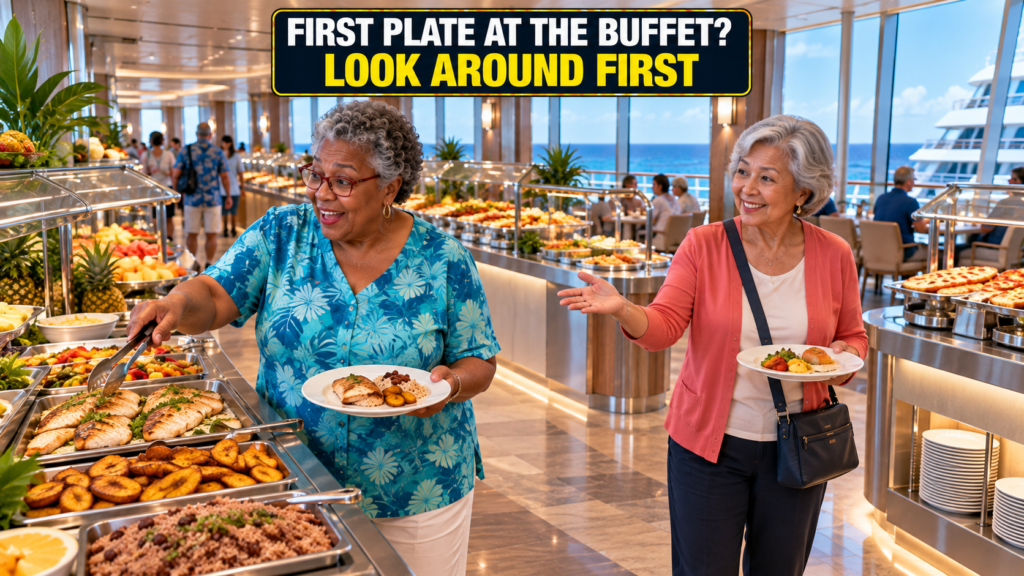
Walking into a cruise buffet hungry creates one predictable problem: the first familiar foods you see can fill your plate before you’ve even discovered what else is being served.
Pizza. Fries. Bread. Burgers. Pasta.
There is nothing wrong with any of them. But on a Caribbean cruise, stopping at the first station can mean reaching the end of the buffet and realizing there were grilled fish, plantains, rice and beans, tropical fruit, rotating hot dishes or freshly prepared options you would have preferred to try.
That’s why your first plate doesn’t have to begin with serving food at all.
Walk the buffet once. See what’s actually available. Then decide what deserves space.
This is especially useful on large ships where buffet stations can extend across a substantial area and selections may change between breakfast, lunch and dinner. A dish you saw yesterday may not appear today, while a Caribbean-inspired special or different hot station may appear later in the sailing.
And that’s an important distinction: the foods below are not guaranteed on every Caribbean cruise. Cruise lines, individual ships, itineraries, menus and daily rotations differ. Even ships sailing similar routes can offer very different buffet selections.
So don’t treat this as a list of 11 foods your ship “must” provide.
Treat it as a scouting list.
Look for these categories first. If they’re available and appeal to you, take a small portion. You can always return for more.
Here are 11 foods that may deserve a place on your first plate before familiar favorites fill it up.
1. Jerk-Style Chicken
If your buffet is serving jerk-style or Caribbean-inspired seasoned chicken, it’s worth noticing before automatically reaching for familiar roasted or fried chicken.
Jerk-inspired preparations can bring a combination of spice, herbs and seasoning that fits naturally with the Caribbean atmosphere of the sailing.
Why it matters
The goal isn’t to declare jerk-style chicken “better” than pizza, burgers or other buffet staples.
It’s about opportunity.
You can eat familiar foods anytime during the cruise. A rotating Caribbean-inspired dish may be available for a much shorter window.
Taking a small portion lets you try it without committing most of your plate.
What to ask
- Is this dish spicy?
- Is this a rotating special?
- Will it be served again later in the sailing?
- Are there milder alternatives nearby?
Important limitation
“Jerk” can describe different preparations, and authenticity and spice levels can vary significantly.
Do not expect every Caribbean cruise buffet to offer jerk chicken—or assume every dish labeled Caribbean-inspired represents one specific island tradition.
2. Freshly Grilled Fish
A freshly prepared fish option can be easy to overlook when it’s positioned farther down the buffet or at a separate grill station.
If you enjoy seafood, check for it before filling your plate elsewhere.
Why it matters
Fish can be particularly appealing when it has just come from a grill or hot station.
It also gives you an alternative to building a first plate entirely around heavier fried or bread-based foods.
But the strongest reason to look first is simply timing: freshly prepared foods are often most appealing when you catch a new batch.
What to ask
- What type of fish is being served?
- Is another batch being prepared?
- Is there a sauce or seasoning on it?
- Does it contain ingredients you need to avoid?
Important limitation
Fish availability varies by ship and meal period.
A Caribbean itinerary does not mean locally caught fish is automatically being served. Never assume the geographic origin of seafood unless the cruise line specifically provides that information.
3. Plantains
Golden plantains can be one of the easiest Caribbean-associated sides to recognize when they appear on a buffet.
If you’ve never tried them, your first plate is a good opportunity to start with a small portion.
Why it matters
Plantains offer something different from the standard potato sides many passengers automatically choose.
A few pieces are enough to find out whether you like the preparation before going back for more.
That’s an excellent buffet strategy in general: sample first, commit later.
What to ask
- Are these sweet or savory?
- How are they prepared?
- Were they recently replenished?
- What entrée pairs well with them?
Important limitation
Plantains are prepared in many different ways across Caribbean and Latin American cuisines.
Don’t expect every preparation to taste the same, and don’t expect plantains on every cruise buffet.
4. Caribbean-Style Rice and Beans
Rice and beans may not be the flashiest dish at the buffet, but don’t walk past them automatically.
When offered as part of a Caribbean-inspired menu, they can complement grilled meat, fish, vegetables and seasoned dishes particularly well.
Why it matters
Buffet plates often become a collection of unrelated foods.
Choosing a small portion of a side that complements your main selection can create a more coherent meal without requiring a huge plate.
What to ask
- What seasonings are used?
- Does the dish contain meat or animal products?
- Is it spicy?
- Which hot dish is it intended to accompany?
Important limitation
There is no single universal “Caribbean rice and beans” recipe.
Ingredients and preparation vary across countries, islands, chefs and cruise lines. Passengers with dietary restrictions should verify ingredients rather than judging from appearance alone.
5. Tropical Fresh Fruit
Pineapple, mango, papaya, melon and other fruit can provide a colorful break from hot buffet foods when those selections are available.
Before building a huge breakfast or lunch plate, look at the fruit station.
Why it matters
Fresh fruit is easy to sample in small quantities, and you can pair it with breakfast foods, yogurt or simply enjoy it separately.
It’s also one category where taking a little first makes sense—you can always return if a particular fruit is especially good that day.
What to ask
- What fruit is available today?
- Has a fresh tray just been brought out?
- Are there whole-fruit options elsewhere?
- Does the selection change during the sailing?
Important limitation
A Caribbean itinerary does not guarantee that buffet fruit was grown locally in the Caribbean.
Availability and sourcing depend on cruise-line provisioning, ports, season and supply chains.
6. Caribbean-Inspired Stews or Curries
One of the easiest buffet mistakes is judging a dish entirely by appearance.
A stew or curry may not photograph as dramatically as a carving station, but it can contain some of the buffet’s most interesting seasoning.
Why it matters
These are ideal foods to sample in a small portion.
Take enough for a few bites, try it, and then decide whether it deserves more space on a second plate.
For passengers who normally choose familiar food, this is a low-risk way to experiment.
What to ask
- What is the main protein or vegetable?
- How spicy is it?
- What are the major ingredients?
- What side pairs with it?
Important limitation
“Caribbean curry” covers an enormous range of culinary traditions and should not be treated as one standardized dish.
Recipes, spice profiles and ingredients can vary substantially.
7. Shrimp or Other Seafood Selections
If a seafood selection appears during your sailing, it may immediately attract attention—and that’s exactly when it’s worth slowing down.
Look at what is actually being offered rather than assuming “seafood” automatically means premium or special.
Why it matters
If you enjoy seafood, a small serving can be a worthwhile addition to your first plate when available.
But there’s no reason to overload your plate simply because a seafood item looks more expensive than the surrounding foods.
Try what you genuinely want.
What to ask
- What seafood is this?
- How is it prepared?
- Does it contain shellfish or other allergens?
- Is this selection available elsewhere onboard?
Important limitation
Do not expect shrimp, crab, lobster or seafood displays simply because you’re on a Caribbean cruise.
Seafood offerings vary significantly by ship, cruise line, meal and sailing.
8. Roasted or Grilled Vegetables
Vegetables don’t need to be the “responsible” section of your plate.
A well-prepared tray of grilled peppers, zucchini, onions, squash or other vegetables can be one of the most flavorful sides available.
Why it matters
They can help balance richer meats, sauces and starches while giving you more variety in a single plate.
For older travelers who prefer not to begin lunch with an extremely heavy plate, sampling several different preparations can also make the buffet easier to explore at a comfortable pace.
What to ask
- Which vegetables were recently prepared?
- Are they seasoned or sauced?
- Do they contain butter or other ingredients relevant to my diet?
- Are there additional vegetable selections at another station?
Important limitation
“Grilled” does not automatically mean healthier, lower-sodium or appropriate for every dietary need.
If an ingredient matters medically or personally, ask the dining staff rather than guessing.
9. Made-to-Order Eggs or Omelets at Breakfast
At breakfast, don’t assume your first plate has to come entirely from trays of ready-made food.
If your ship offers a made-to-order egg or omelet station, check the line and available ingredients before filling your plate.
Why it matters
Made-to-order stations allow you to choose the preparation and, in many cases, select from available fillings.
The food also comes directly from the cooking station rather than sitting on your plate while you continue exploring the buffet.
What to ask
- Which fillings are available?
- Can I request a simpler preparation?
- How long is the current wait?
- Are there ingredient or allergy concerns I should mention?
Important limitation
Not every buffet has the same made-to-order stations or operating hours.
During busy breakfast periods, waiting times may also make another option more practical.
10. Freshly Carved Meat
A carving station deserves a quick look before you build the rest of your meal.
Depending on the day, the ship may offer a roast or another carved protein that works as the centerpiece of your plate.
Why it matters
Seeing the carving station first lets you choose sides around the main item rather than discovering it after you’ve already filled the plate.
It also gives you more control over portion size: ask for what you expect to eat rather than piling on several entrées “just to try them.”
What to ask
- What is being carved today?
- Can I request a smaller portion?
- What sauce accompanies it?
- Will the selection change at another meal?
Important limitation
Carving selections rotate and are not guaranteed.
Don’t build expectations around a specific roast or premium meat unless your cruise line has actually advertised it for your sailing.
11. A Small Caribbean-Inspired Dessert
Your “first plate” strategy doesn’t have to end with the savory buffet.
Before automatically taking a large slice of a familiar cake, look at the entire dessert selection for a tropical-fruit, coconut or other Caribbean-inspired option that interests you.
Then start small.
Why it matters
Buffets make it extremely easy to take several full desserts because each one looks appealing.
A small sample lets you discover something new without turning tasting into unnecessary food waste.
If it’s excellent, you can return.
What to ask
- What is this dessert?
- What flavors or ingredients does it contain?
- Does it contain alcohol, nuts or another ingredient I avoid?
- Is there a smaller portion available?
Important limitation
Do not assume a dessert is authentically Caribbean simply because it contains coconut, pineapple or rum flavoring.
Cruise buffets often serve interpretations inspired by destinations rather than traditional regional recipes.
The First-Plate Strategy That Makes a Cruise Buffet Better
The most useful buffet trick on this list isn’t a specific food.
It’s waiting before you fill the plate.
When you arrive, take a quick walk through the available stations. Look for dishes you haven’t seen before. Notice what’s being freshly prepared. Check the carving and made-to-order stations. See what sides pair naturally with the entrée you actually want.
Then go back and build your plate.
A simple first plate might contain a small serving of grilled fish, plantains, rice and beans and vegetables—if those are actually being served and they appeal to you.
Another passenger may look at the entire buffet and still choose pizza.
That’s perfectly fine.
The objective isn’t to create a “correct” Caribbean cruise plate. It’s to avoid making your choice before you’ve seen your choices.
And remember the easiest buffet rule of all:
Take a little first. If you love it, go back for more.
You’ll get to try more of what the ship is serving, keep your first plate manageable, and reduce the chance of reaching the end of the buffet thinking:
“I wish I’d seen that five minutes ago.”
