
CRUISE NEW
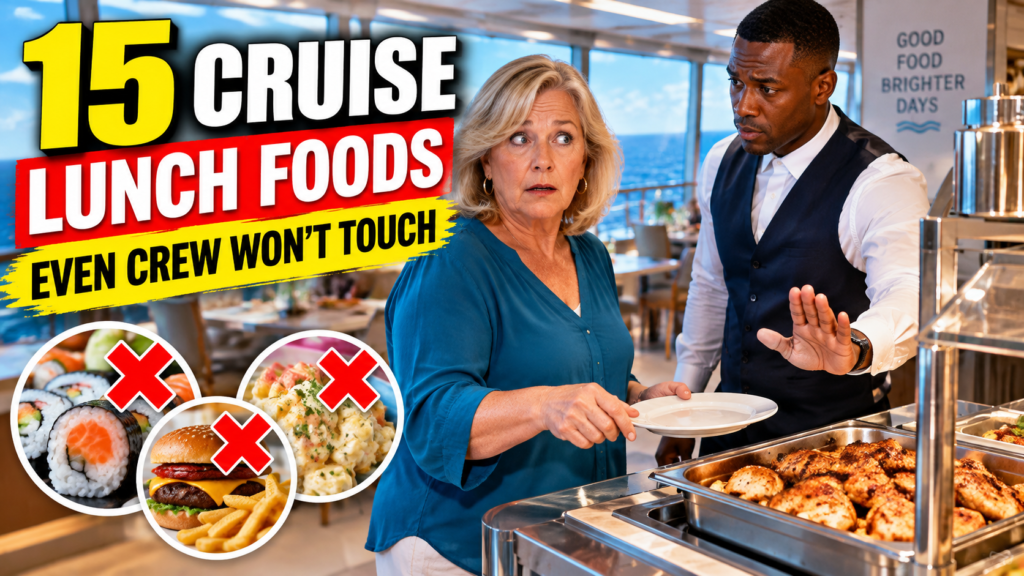
15 Cruise Lunch Foods Even Crew Members Won’t Touch
Sep
Cruise ship lunch can feel like the easiest meal of the day. You walk into a huge buffet, grab a plate, and suddenly you are choosing between roasted chicken, seafood, burgers, pasta, salads, sandwiches, pizza, desserts, and dishes you may not even have noticed on the first lap.
But experienced cruisers learn something quickly: the smartest buffet decision is not always about which food looks the most tempting.
It is often about when you arrive, how the food is being held, whether a dish is supposed to be hot or cold, and what condition it is in when you reach the serving station.
That distinction matters.
The title of this article should not be interpreted as an official list of foods that cruise ship crew members universally refuse to eat. There is no verified CDC list called “15 foods crew members won’t touch,” and individual crew members obviously have different preferences.
What we can verify is far more useful.
The CDC’s Vessel Sanitation Program evaluates food-safety practices aboard cruise ships under its jurisdiction, while CDC guidance for travelers emphasizes a simple principle that can transform the way you approach a buffet: hot food should be served hot, and cold food should be served cold.
So instead of treating these 15 foods as automatically “bad,” think of them as 15 lunch choices worth looking at more carefully before they reach your plate.
1. Chicken That Is Supposed to Be Hot but Feels Lukewarm
Roasted or grilled chicken can be one of the easiest lunch choices on a cruise. It is familiar, filling, and usually available alongside vegetables, potatoes, rice, or salad.
The problem is not chicken itself.
The warning sign is a hot dish that no longer seems properly hot.
Imagine reaching the buffet at the end of a busy lunch rush. There are only a few pieces of chicken left in the tray. You take one, return to your table, and discover that it is barely warm.
That is a perfectly reasonable moment to stop rather than simply eat it because you do not want to waste food.
CDC travel guidance advises avoiding lukewarm food and says hot buffet food should be hot while cold food should remain chilled.
If something seems wrong, tell a crew member.
Do not assume you know why the temperature changed, and do not declare that the entire buffet is unsafe. Let the dining staff investigate and replace or check the food when appropriate.
That is exactly why crew members are there.
2. Sushi and Raw Seafood Selections
A beautiful sushi display can be difficult to ignore, especially when you have spent the morning swimming, exploring a port, or walking around the ship.
But sushi deserves more attention than a basket of bread or a packaged snack because some versions contain raw or undercooked seafood.
CDC food-safety guidance specifically advises that fish and seafood be properly cooked when reducing foodborne-illness risk.
That does not mean you must never eat sushi on a cruise.
It means you should understand what you are choosing.
If the item contains raw seafood, you are accepting a different food-safety profile than you would with a fully cooked dish. Travelers at higher risk of serious foodborne illness may need to be especially cautious.
Also pay attention to the condition of the station. Cold items should actually be cold.
A gorgeous presentation does not replace temperature control.
3. The Last Pieces of Pizza Sitting at the Station
Fresh cruise-ship pizza can be fantastic.
The difference between a slice that has just arrived and one that has been sitting around is often immediately obvious—not necessarily because the older slice is unsafe, but because quality deteriorates.
Cheese tightens. Crust dries. Toppings lose their texture.
This is where an important distinction helps: quality and food safety are not the same thing.
A pizza slice that is less crisp than you prefer is not automatically unsafe.
Instead of making assumptions based solely on appearance, look at how the station is operating. If fresh pizzas are continually coming out, waiting a few minutes may give you a much better lunch.
Sometimes the best buffet trick is simply patience.
4. Pre-Dressed Salad That Has Lost Its Texture
A dressed Caesar salad or mixed green salad can look great when lunch service begins.
Later, the same bowl may look considerably less appealing.
The lettuce absorbs dressing, delicate greens soften, croutons lose their crunch, and the entire dish can become watery.
Again, this is often a quality issue rather than proof of a safety problem.
A smarter option may be to choose fresh greens and add dressing yourself when the buffet setup allows it.
Cold salad components should also remain properly chilled.
CDC advises travelers choosing from salad bars and buffets to make sure cold foods are kept cold.
That simple observation is more useful than trying to memorize a list of “forbidden” buffet foods.
5. Creamy Potato, Pasta, or Egg Salads
Cold prepared salads deserve the same basic temperature check.
Potato salad, pasta salad, egg salad, and similar dishes can be popular because they are convenient sides requiring no waiting.
But if a dish that is supposed to be cold does not seem properly chilled, choose another option and alert staff.
Do not rely on the idea that mayonnaise alone tells you whether something is safe or unsafe. That oversimplifies the issue.
Think instead about temperature, handling, ingredients, and storage.
And remember that some prepared dishes may contain eggs. CDC advises extra caution with foods containing raw or undercooked eggs and notes that pasteurized eggs can reduce risk in recipes where eggs may not be fully cooked.
6. Seafood Dishes Near the End of Lunch Service
Shrimp, fish, mussels, and other seafood can make a cruise buffet feel much more special than lunch at home.
There is no reason to label all buffet seafood as something to avoid.
Instead, use the same standards you would apply elsewhere.
Is a hot seafood dish actually hot?
Is a chilled seafood item properly cold?
Does a cooked item appear fully cooked?
CDC specifically includes fish and seafood among foods travelers should have cooked thoroughly when dining out.
If something does not seem right, there is almost always another option only a few steps away.
A cruise buffet is one of the easiest places in the world to change your mind about lunch.
7. Burgers That Have Been Waiting Instead of Being Freshly Prepared
A burger can be one of the simplest cruise lunches.
But if you have a choice between a burger that has just been prepared and one that has been sitting at a holding station, the fresher option usually wins on quality alone.
There is also a food-safety reason to pay attention to cooking.
Ground meat is one of the foods CDC specifically identifies when advising diners to choose properly cooked food.
If you are unsure about doneness, ask.
What you should not do is assume that a burger is dangerous simply because it came from a buffet. Cruise-ship food operations are subject to extensive sanitation standards and inspections when vessels fall under CDC VSP jurisdiction.
The useful habit is not fear.
It is awareness.
8. Rice That Is Neither Clearly Hot nor Properly Chilled
Rice looks harmless, and in most meals it is.
But the same rule applies here as with other prepared foods: temperature control matters.
If rice is being served as a hot side, you want it appropriately hot. If it is part of a chilled prepared dish, it should be appropriately cold.
What you do not want is to make your own food-safety determination based on how long you think a tray has been there.
Cruise kitchens operate under procedures passengers cannot see from the dining room.
If you have a genuine temperature concern, tell staff.
That is more responsible than guessing that a dish has been sitting out for a particular number of hours.
9. Fried Food That Has Been Under the Heat Lamp Too Long
French fries, fried fish, chicken tenders, onion rings, and other fried foods are often victims of the buffet’s biggest quality problem: time.
The difference between freshly fried food and an older batch can be dramatic.
Crunchy becomes soft.
Crisp coating becomes heavy.
Fries become limp.
This does not mean a soft French fry is a public-health emergency.
It means that buffet timing affects eating quality.
If you see a fresh batch coming, consider waiting.
This illustrates one of the biggest lessons behind this entire list: some foods are worth “skipping” because they are no longer at their best, while others deserve attention because temperature or doneness may affect food safety.
Do not confuse the two.
10. Pasta That Has Been Holding for a Long Time
Pasta is another food that changes quickly after cooking.
Sauce thickens. Noodles continue absorbing moisture. Creamy pasta can become heavy, while uncovered noodles can dry around the edges.
A pasta station that prepares or finishes dishes in smaller batches may therefore offer a better result than taking the final scoop from a large tray.
If the pasta is intended to be served hot, the same CDC hot-food principle applies.
But do not mistake an imperfect texture for evidence of unsafe food.
The goal is to make an informed choice, not to inspect your vacation lunch like a crime scene.
11. Hot Dogs and Sausages That Have Lost Their Fresh-Off-the-Grill Appeal
Hot dogs and sausages are common pool-deck and buffet foods because they can be served quickly to large numbers of guests.
Their quality is strongly affected by holding time.
A freshly prepared sausage can be juicy and flavorful. One that has been held longer may dry out or lose texture.
Again, separate quality cues from verified safety concerns.
If the food is being served hot, it should be hot. If your concern goes beyond texture and you believe the temperature is wrong, ask a dining employee rather than diagnosing the problem yourself.
A professional response may be as simple as checking the tray and bringing out another batch.
12. Pre-Made Sandwiches With Temperature-Sensitive Fillings
Pre-made sandwiches are incredibly convenient on port days.
Grab one, add fruit, and lunch is finished.
But the filling matters.
A simple dry bread product is different from a sandwich containing ingredients that require temperature control.
Chicken salad, egg salad, seafood fillings, sliced meats, cheese, and similar ingredients should be handled and stored appropriately.
If these sandwiches are presented as chilled items, they should feel like chilled food, not something that has warmed noticeably.
If you want a sandwich but do not like what you see at the grab-and-go area, check whether the ship has a made-to-order station elsewhere.
Fresh preparation may provide both better texture and more control over ingredients.
13. Egg-Based Lunch Dishes That Appear Undercooked
Eggs do not disappear when breakfast ends.
Lunch buffets may include quiche, salads, sauces, dressings, baked dishes, desserts, or other recipes containing eggs.
CDC recommends that diners be cautious with raw or undercooked eggs and specifically suggests asking about pasteurized eggs in certain dishes such as Caesar dressing, custards, tiramisu, and hollandaise sauce.
This does not mean every custard or Caesar salad on a cruise ship is dangerous.
It means preparation matters.
If you have particular health concerns or belong to a group more vulnerable to serious foodborne illness, asking questions is better than guessing.
Dining staff can tell you far more about how a particular dish was prepared than its appearance can.
14. Cream or Custard Desserts That Are Not Properly Chilled
Dessert stations are designed to destroy willpower.
Cakes, pastries, puddings, custards, mousses, fruit, cookies, and ice cream can turn “I’m just going to look” into another full plate.
For food-safety purposes, however, not all desserts are identical.
A dry cookie is very different from a temperature-sensitive custard or cream-based dessert.
For chilled desserts, pay attention to whether the food is actually being kept cold.
Egg-based desserts also deserve the preparation considerations discussed above.
There is no need to become paranoid about dessert.
Simply apply the same principle consistently: if a food is supposed to be cold, it should be cold.
And if the dessert looks tired rather than unsafe, the smartest move may simply be to wait until the next fresh tray arrives.
15. Anything That Should Be Hot but Is Only Lukewarm
This final item is deliberately broad because it may be the most useful rule on the entire list.
Forget chicken for a moment.
It could be soup.
It could be fish.
It could be vegetables.
It could be meat.
It could be pasta.
The exact dish matters less than the mismatch between how it should be served and how it actually reaches you.
CDC’s travel guidance is straightforward: avoid lukewarm food. Hot foods should be served hot, while cold foods should be served cold.
That does not mean passengers need to carry thermometers around the buffet.
It means you should pay attention.
If a dish that is clearly meant to be hot seems barely warm, you have plenty of alternatives.
Choose something else and politely tell a crew member.
That allows trained staff to decide whether the food needs to be checked, replaced, reheated according to proper procedures, or handled another way.
What Cruise Ship Food Safety Actually Looks Like
The biggest mistake this title could create would be convincing readers that cruise buffets operate without serious oversight.
That is not accurate.
For ships under its jurisdiction, the CDC Vessel Sanitation Program evaluates public-health practices in multiple areas aboard cruise ships, including food safety.
VSP inspections are periodic and unannounced. Ships under VSP jurisdiction are generally subject to two inspections each year, although CDC notes that a vessel spending an extended period outside the United States may not receive both inspections during that period.
CDC also makes cruise-ship inspection scores and reports publicly available.
The current operational framework includes the 2025 Vessel Sanitation Program Environmental Public Health Standards, which were developed with reference to food-safety principles including the FDA Food Code and World Health Organization ship-sanitation guidance.
In other words, the lesson is not that crew members know some secret list of dangerous lunch foods.
The more useful lesson is that professional cruise food operations pay close attention to factors passengers sometimes overlook: temperature, cooking, storage, handling, sanitation, cross-contamination prevention, and employee practices.
Those are the same clues smart passengers can keep in mind without turning lunch into a source of anxiety.
The Buffet Habit Experienced Cruisers Learn
There is another trick that requires no food-safety expertise whatsoever.
Walk the buffet once before filling your plate.
Cruise buffets can be enormous. The first station you encounter may contain burgers and fries, while around the corner there could be fresh carving, made-to-order food, lighter dishes, regional specialties, or another station replenishing food in smaller batches.
If you start piling food onto your plate immediately, you may discover something much better thirty seconds later.
A first lap also lets you see which stations are busy and which dishes are being replenished.
Freshness often improves simply because turnover is faster.
Then choose what actually looks appealing.
You are not trying to “beat” the buffet.
You are trying to eat the food at its best.
What to Do If Something Doesn’t Look Right
Do not create a confrontation.
Do not announce to everyone around you that the food is unsafe.
And do not make a viral accusation based solely on the appearance of one tray.
Simply stop serving yourself from that dish and tell a dining employee what you noticed.
Be specific.
“This chicken seems barely warm.”
“This cold dish doesn’t feel very chilled.”
“I’m not sure whether this burger is fully cooked.”
Those observations give staff something concrete to check.
The employee can then follow the ship’s procedures.
That is far more useful than trying to determine from the passenger side of the sneeze guard exactly what happened in the galley.
Don’t Forget Your Own Hands
Buffet safety is not exclusively the cruise line’s responsibility.
Passengers also play a role.
CDC recommends washing your hands with soap and water before eating. When soap and water are not readily available, CDC says an alcohol-based hand sanitizer containing at least 60% alcohol can be used.
On a ship carrying thousands of people, shared surfaces are everywhere.
Elevator buttons, stair rails, serving utensils, door handles, chairs, and touchscreens can all be handled repeatedly.
CDC specifically notes that illnesses aboard cruise ships can spread person to person and through frequently touched objects and shared utensils.
So one of the easiest cruise lunch habits has nothing to do with choosing between chicken and pizza.
Wash your hands.
Should You Avoid Cruise Buffets?
For most travelers, that is not the takeaway from this article.
Cruise buffets remain popular precisely because they provide variety, convenience, and flexibility. They can also be one of the most enjoyable ways to sample different foods without committing to a full restaurant meal.
The smarter strategy is selective rather than fearful.
Favor food that appears freshly prepared.
Pay attention to whether hot dishes are actually hot and chilled dishes remain cold.
Choose thoroughly cooked poultry, ground meat, fish, seafood, and eggs when appropriate.
Ask questions if you are uncertain.
Tell staff if something seems wrong.
And when a dish simply looks like it has seen better moments, remember the greatest advantage of a cruise buffet:
There is almost always something else to eat.
The Bottom Line
The real secret behind 15 Cruise Lunch Foods Even Crew Members Won’t Touch is not a mysterious blacklist hidden in the galley.
There is no verified universal list showing that cruise crew members refuse to eat these exact 15 foods.
What does exist is something much more practical: established food-safety guidance that can help passengers make smarter choices.
The next time you walk into the buffet, look beyond the most tempting tray.
Is a hot dish properly hot?
Is a cold dish actually chilled?
Does cooked poultry, seafood, egg, or ground meat appear properly cooked?
Is a fresh batch about to arrive?
And if something genuinely concerns you, are you willing to skip it and tell a crew member?
Those few habits take seconds.
They can also help you choose a better lunch—and get back to enjoying the reason you boarded the ship in the first place.
