
AIRPORT TIPS
FLYING THIS SEPTEMBER? 11 AIRPORT RULES SENIORS NEED TO KNOW

Sep
September can be an excellent month to fly. Summer crowds begin to change, families return to school routines, and many older travelers start planning fall vacations, cruises, family visits, and international trips.
But there is one mistake you do not want to discover at the airport:
The travel rule you remembered is no longer the rule you need today.
Imagine a 70-year-old traveler standing at an airport counter and becoming frustrated when an identification problem appears.
“I’ve used this ID for years. Why isn’t it good enough now?”
That reaction is understandable. Something that worked on previous trips can feel as though it should keep working forever.
Airport security doesn’t work that way.
Identification requirements can change. Different screening programs have different procedures. Medications and medical devices may require special handling. And an item being generally permitted does not necessarily mean it will pass through the checkpoint without additional screening.
There also isn’t a separate set of 11 September rules that suddenly applies only to seniors.
Instead, these are 11 current requirements, procedures, and practical rules travelers over 60 should re-check before flying this September.
Doing that at home is much easier than learning about them while standing in an airport line.
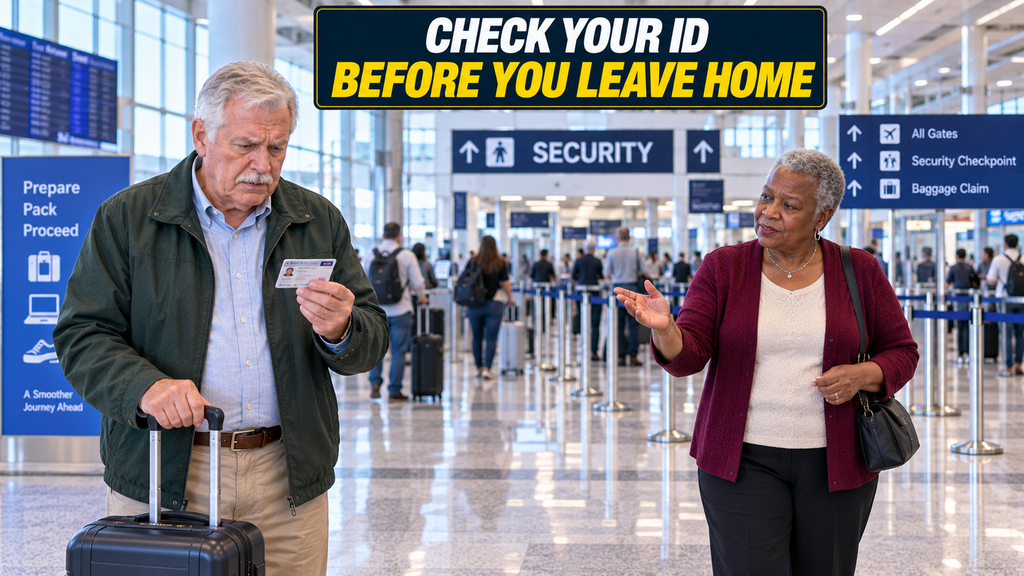
1. DON’T Arrive With an ID That Doesn’t Meet Current Requirements
This is the first thing to check before your September trip.
For travelers 18 and older, TSA requires acceptable identification at the airport security checkpoint.
And one major change is already in effect.
Since May 7, 2025, a standard state-issued driver’s license or identification card that is not REAL ID compliant is no longer accepted by TSA as the normal state-issued identification for airport checkpoint purposes.
That does not mean a REAL ID driver’s license is your only option.
TSA lists several alternatives, including a U.S. passport, U.S. passport card, certain DHS trusted-traveler cards, permanent resident cards, and other approved forms of identification.
That’s why the question before leaving home shouldn’t simply be:
“Do I have my driver’s license?”
It should be:
“Is the identification I’m taking actually on TSA’s current acceptable-ID list?”
If you’re relying on a state driver’s license or state identification card, determine whether it complies with REAL ID requirements. If you’re uncertain, TSA recommends checking with your state’s motor-vehicle agency.
And don’t wait until you are standing at security to investigate.
Before you fly: Check the exact identification you plan to carry and make sure it satisfies the current TSA requirements.
2. DON’T Assume an Expired ID Is Automatically Useless
Here is a rule that surprises many travelers.
An expiration date does not necessarily mean TSA will automatically refuse every ID the day after it expires.
TSA currently states that it accepts the forms of identification on its acceptable-ID list for up to two years after expiration.
That can matter to an older traveler who opens a wallet shortly before vacation and realizes that an identification document recently expired.
But don’t turn this into a reason to ignore expiration dates.
There may be other situations during your trip where valid, unexpired identification is important. Airlines, international destinations, rental-car companies, hotels, cruise operators, and other organizations can have requirements separate from TSA checkpoint screening.
The key distinction is this:
TSA’s checkpoint policy is not automatically the rule for every other part of your journey.
For an international trip, for example, passport validity and destination entry requirements are a completely separate issue that should be checked well before departure.
Before you fly: If your ID is expired, check the current TSA policy for that exact form of identification and separately verify any airline, destination, or travel-provider requirements.
3. DON’T Assume Forgetting Your ID Automatically Means Your Trip Is Over
You reach the airport.
Then comes the awful realization:
Your acceptable identification isn’t with you.
Is the trip automatically over?
Not necessarily.
TSA says a traveler who arrives without acceptable identification may be asked to complete an identity-verification process. This can involve providing information such as your name and current address so TSA can attempt to confirm your identity.
If TSA successfully confirms your identity, you may be permitted to enter the screening checkpoint, although additional screening may occur.
But there is an important limit.
If your identity cannot be confirmed — or you decline to cooperate with the verification process — TSA says you will not be permitted to enter the security checkpoint.
So this is a backup process, not a packing strategy.
Don’t intentionally leave acceptable identification at home because you assume TSA will simply look you up.
The process can take additional time, and successful verification isn’t something you should casually depend on.
Before you fly: Carry acceptable identification whenever possible. Treat identity verification as a potential fallback, not an alternative to preparing correctly.
4. DON’T Treat Medically Necessary Liquids Like Ordinary Toiletries
This distinction can be extremely important for travelers who carry medication.
Most travelers know some version of the familiar carry-on liquids restriction.
But medically necessary liquids are treated differently.
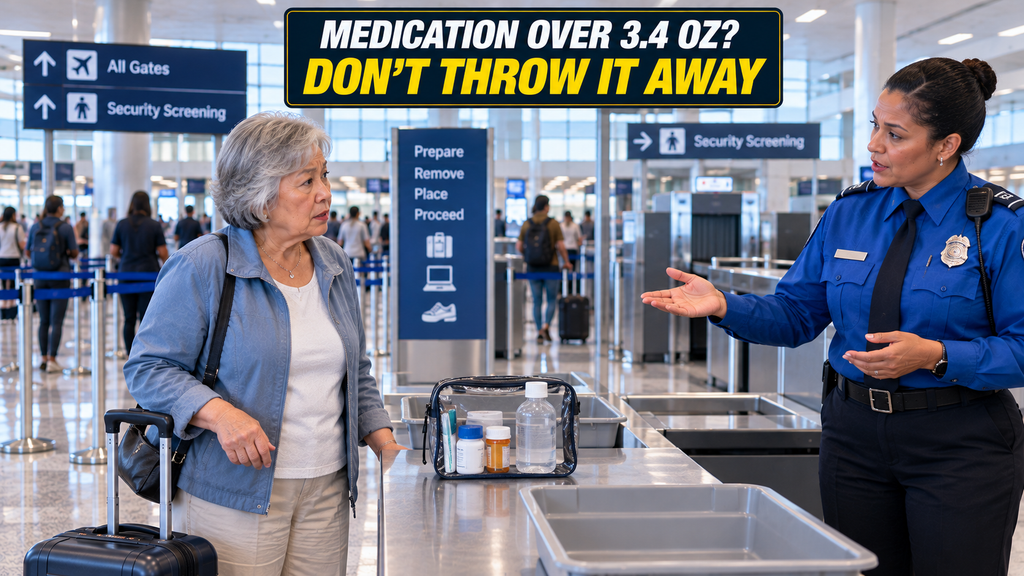
TSA states that passengers may bring medically necessary liquids, medications, and creams in excess of 3.4 ounces or 100 milliliters in carry-on baggage, although those items must undergo security screening.
Liquid medication also does not have to be placed inside the standard plastic zip-top liquids bag.
This matters because a traveler should not throw away necessary medication simply because the container exceeds the ordinary 3-1-1 size limit.
At the same time, “medically necessary” does not mean “exempt from screening.”
TSA may screen the medication and related supplies.
A smart approach is to organize these items before reaching the checkpoint so you can identify them easily and follow the officer’s instructions.
Don’t bury something medically important under layers of clothing and miscellaneous objects if you know you may need to present it for screening.
Before you fly: Keep medically necessary liquids organized and be prepared to identify them for screening rather than assuming the ordinary toiletry rule applies in exactly the same way.
5. DON’T Stay Silent About a Medical Device or Screening Need
Some travelers worry that mentioning a medical condition will make airport security more difficult.
Silence can sometimes create more confusion.
TSA provides procedures for passengers traveling with medical devices, equipment, disabilities, and medical conditions.
For example, TSA states that medical devices attached to the body do not have to be removed simply for screening. Medical supplies may, however, require separate screening and testing.
Travelers can communicate relevant information to the TSA officer before screening.
TSA also provides a Notification Card that travelers with disabilities or medical conditions can use to communicate that a health condition, disability, or medical device may affect screening.
The card does not exempt anyone from security screening.
Its purpose is communication.
If you have an implanted or attached medical device, mobility limitation, or another condition that could affect screening, don’t assume the officer knows about it just by looking at you.
Before you fly: Know what your medical equipment requires and communicate relevant screening needs before the screening procedure begins.
6. DON’T Assume Every Security Lane Has Exactly the Same Routine
You may remember being told:
“Take off your shoes.”
Then on another trip, someone says:
“Leave them on.”
Or perhaps you remember removing your laptop on one flight but not another.
That does not automatically mean somebody is ignoring the rules.
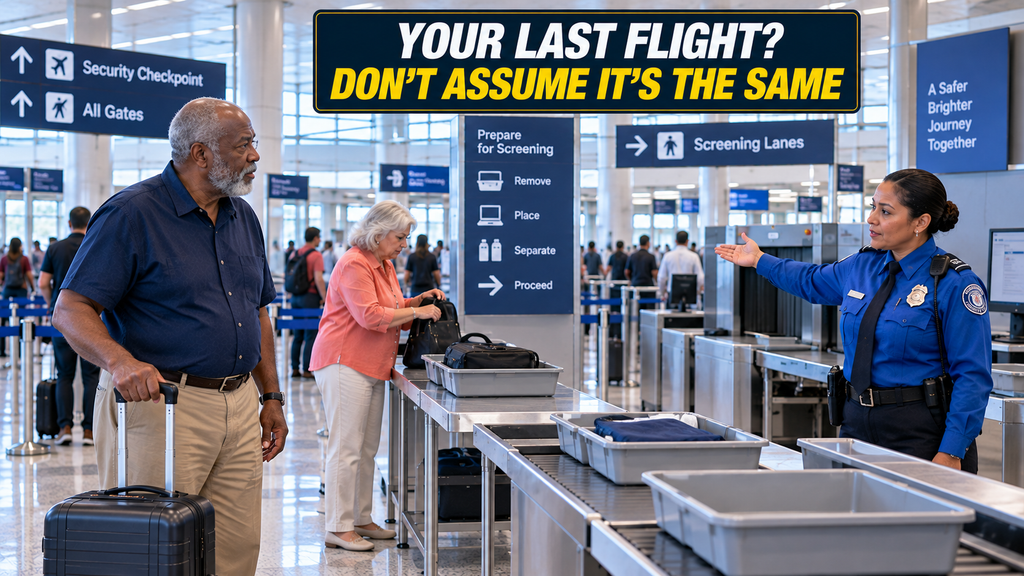
Screening procedures can differ depending on the lane and screening program.
For example, TSA states that TSA PreCheck passengers generally do not need to remove shoes, laptops, compliant 3-1-1 liquids, belts, or light jackets during expedited screening.
That doesn’t mean every traveler standing in every lane should copy what the person beside them is doing.
And it doesn’t mean you should argue because the procedure differs from your last trip.
Airport screening equipment and circumstances can vary.
The practical rule is simple:
Pay attention to the instructions for the lane you are actually using.
If you don’t understand an instruction, ask.
Guessing based on what happened three years ago can create unnecessary confusion.
At the checkpoint: Follow the instructions for your current screening lane instead of assuming your previous airport experience controls today’s procedure.
7. DON’T Assume “TSA Allows It” Means “Nobody Will Look at It”
This distinction is easy to miss.
TSA maintains its useful What Can I Bring? database, which tells travelers whether many common items are generally permitted in carry-on baggage, checked baggage, both, or neither.
Checking it before packing can prevent a lot of trouble.
But there is another part travelers need to understand.
TSA says that even an item that is generally permitted may receive additional screening or may not be allowed through the checkpoint if it triggers an alarm, appears to have been tampered with, or presents another security concern.
In other words:
Generally permitted does not mean guaranteed to pass untouched.
Suppose you have traveled with an unusual object several times without difficulty.
That history does not mean an officer must wave it through on every future trip.
If something in your bag requires closer examination, remain calm and follow instructions.
Before you fly: Check questionable items individually instead of relying on “I’ve taken this before.”
8. DON’T Pack Your Carry-On Like a Junk Drawer
This isn’t a new federal law.
It’s a practical screening rule that can make your airport experience much easier.
A carry-on stuffed with cables, food, containers, medication, electronics, chargers, miscellaneous metal objects, and loose personal items can be difficult to organize when you reach security.
TSA encourages travelers to organize carry-on bags to make screening easier.
Some items may also need to be separated depending on the screening procedure being used.
For travelers over 60, organization can have another advantage: it reduces the frantic last-minute searching that leads to things being misplaced.
Think in zones.
Keep identification and boarding information accessible before the checkpoint.
Keep medications organized.
Know where your electronics are.
Know which items may require separate screening.
Avoid creating a situation where you have to empty half your bag onto a table just to find one object.
Before you fly: Pack so that anything you may need at the checkpoint can be reached without dismantling your entire carry-on.
9. DON’T Put a Power Bank Wherever You Want
Portable chargers have become essential travel equipment.
But batteries deserve special attention when packing.
Spare lithium batteries and power banks are generally subject to aviation safety requirements that differ from ordinary luggage.
FAA guidance requires spare lithium batteries and power banks to be carried in carry-on baggage rather than checked baggage. Battery terminals should also be protected from short circuit.
This becomes particularly important when an airline asks passengers to gate-check a carry-on bag.
If your power bank or spare lithium battery is inside that bag, don’t simply hand over the bag without thinking about what’s inside.
Remove items that are not permitted in checked baggage before the bag is checked.
Travelers should also verify applicable battery-size limitations and airline requirements, particularly for larger batteries.
Before you fly: Keep ordinary spare lithium batteries and power banks where the applicable rules require them — in your carry-on — and protect them from accidental short circuits.
10. DON’T Treat Additional Screening Like an Accusation
An item in your bag triggers additional screening.
Or an officer needs to inspect something more closely.
It can be frustrating, particularly when you’re worried about boarding time.
But additional screening does not automatically mean you’ve done something wrong.
TSA specifically notes that even generally permitted items can receive additional screening.
Passengers may also encounter different screening technologies or procedures.
If you have a concern during the screening process, ask the officer for clarification.
TSA guidance also says travelers may request a pat-down instead of certain screening technology in many circumstances, although there are situations where passengers selected for enhanced screening may not be able to opt out of the required process.
Travelers can request private screening for a pat-down.
The useful mindset is:
Additional screening is a process to complete, not automatically a confrontation to win.
Be clear about medical devices or special needs, ask questions when necessary, and follow instructions.
At the checkpoint: Don’t interpret every extra screening step as an accusation or punishment.
11. DON’T Wait Until You Reach Security to Learn About TSA Cares
This may be one of the most useful resources for some older travelers.
TSA Cares is a helpline designed to assist travelers with disabilities, medical conditions, and other circumstances that can affect security screening.
Travelers can use TSA Cares before traveling to ask questions about screening policies, procedures, and what to expect.
TSA also provides Passenger Support Specialists who are specially trained to assist travelers with disabilities and medical conditions.
This doesn’t mean every traveler over 60 needs TSA Cares.
Age alone is not the reason to use it.
But if a medical condition, disability, mobility issue, medical equipment, or another screening concern makes you uncertain about what will happen at security, learning about the available assistance before departure can remove a lot of uncertainty.
Don’t wait until a busy checkpoint to begin researching a complicated screening question.
Before you fly: If a disability or medical condition may affect screening, review TSA Cares before your travel day and determine whether requesting assistance would be useful.
The September Pre-Airport Check
A few days before your flight, run through one final check.
Start with your identification.
Is the ID you plan to use currently accepted by TSA? If you’re using a state driver’s license or ID, does it satisfy the post-May 7, 2025 REAL ID requirement, or are you carrying another acceptable form of identification?
Then look at your carry-on.
Are your medications organized?
Do you have medically necessary liquids that may require separate screening?
Are there any unusual objects you should check in TSA’s What Can I Bring? database?
Where is your power bank?
If your carry-on unexpectedly gets gate-checked, do you know which battery-powered items need to come out?
Then consider your own screening needs.
Do you have a medical device?
Would communicating a medical condition before screening help?
Could TSA Cares be useful?
Finally, leave yourself enough time that a normal security question does not become an emergency.
Preparation changes the entire airport experience.
One Important Myth About Seniors and Airport Security
There is no blanket rule saying:
“Once you’re over 60, normal TSA rules no longer apply.”
And this article should not be interpreted as saying there are 11 special federal rules that suddenly apply only because a traveler is a senior.
The requirements surrounding acceptable identification, prohibited items, and security screening generally apply based on the relevant TSA rules and the passenger’s circumstances — not simply because someone celebrated a particular birthday.
Some travelers may qualify for particular screening procedures or assistance, and medical needs can change how certain items are handled.
That’s why it is better to research the specific issue than rely on a broad “senior exemption.”
What Our Check-In Argument Gets Right — And What It Doesn’t
Remember the older woman at the check-in counter?
She becomes angry and says:
“I’ve used this ID for years! Why isn’t it good enough now?”
That scene captures a real travel mistake:
assuming that past acceptance guarantees current acceptance.
But the scene intentionally does not tell you why her particular ID has a problem.
It doesn’t say she’s being rejected because she’s over 60.
It doesn’t say every expired license is unacceptable.
And it doesn’t claim a particular airline employee makes the final TSA checkpoint decision.
Those details matter.
For the actual TSA checkpoint, travelers should check TSA’s current acceptable-identification requirements rather than relying on an argument at an airline counter.
The Bottom Line
If you’re flying this September, don’t wait until you’re standing inside the terminal to discover what has changed since your last trip.
Check your identification.
Know the difference between ordinary liquids and medically necessary liquids.
Communicate medical screening needs.
Don’t assume your security lane will work exactly like the last one.
Check unfamiliar items before packing.
Keep power banks and spare lithium batteries where aviation rules require them.
And if a disability or medical condition may affect screening, learn about TSA Cares before departure.
Most importantly, don’t rely on one of the most dangerous sentences in travel:
“But I’ve always done it this way.”
Airport procedures evolve.
A few minutes of checking before you leave home can save you from learning the difference while your flight is getting closer to departure.
